
SUPERMAHALLA
Location:
Uzbekistan
Year:
2025
Status:
Designed
Area:
4ha
Work done:
Site plan
Architecture
Visualization
The team:
Katerina Kovaliova
Vlad Chabai
Mikhail Naumov
Tatsiana Palkhouskaya
Darya Rogovtsova
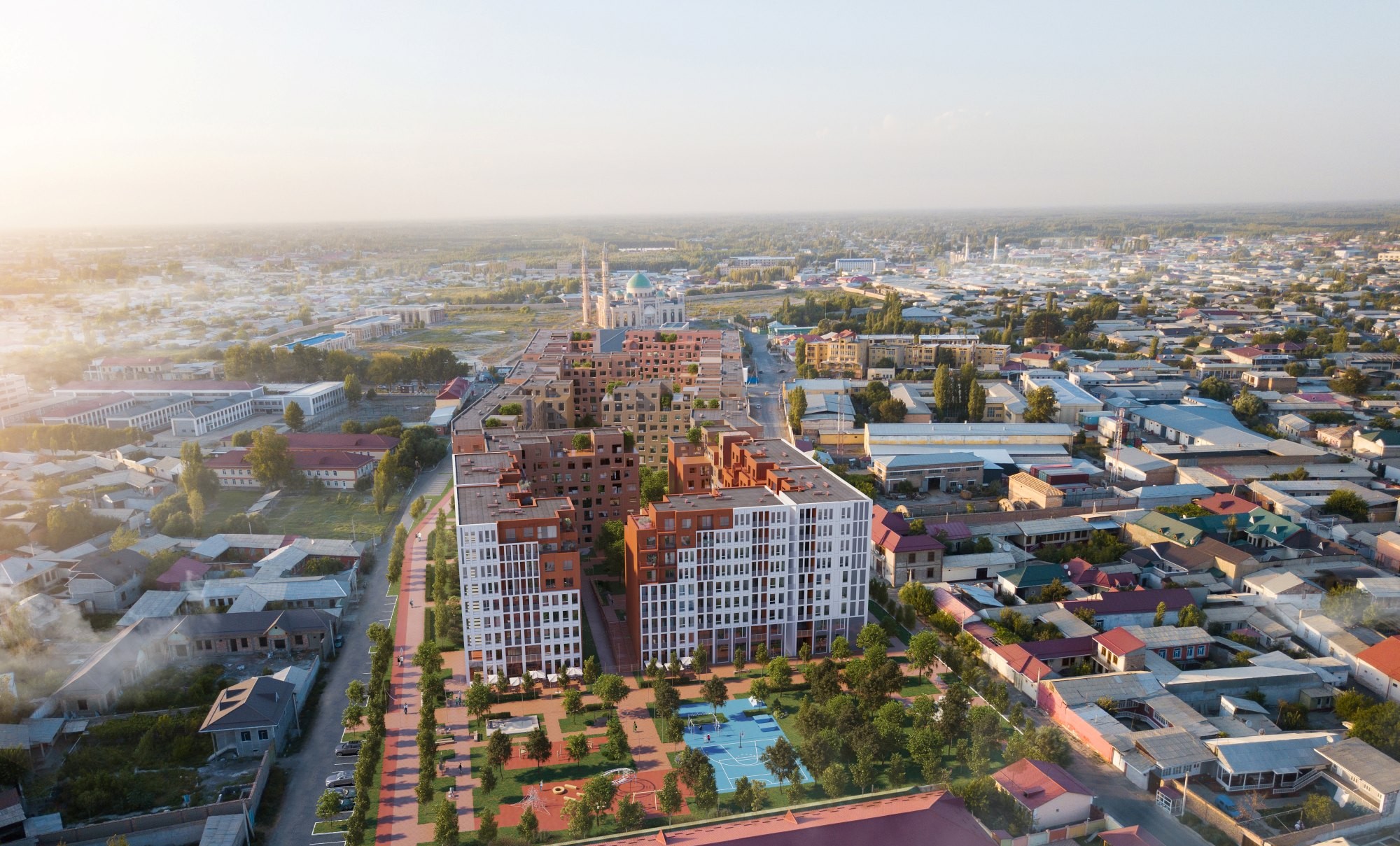
The location of our new project is a city in Uzbekistan with a rich centuries-old history: part of the Great Silk Road, a center of artistic crafts, and a former capital of a khanate where magnificent palaces, mosques, and mausoleums have been preserved.
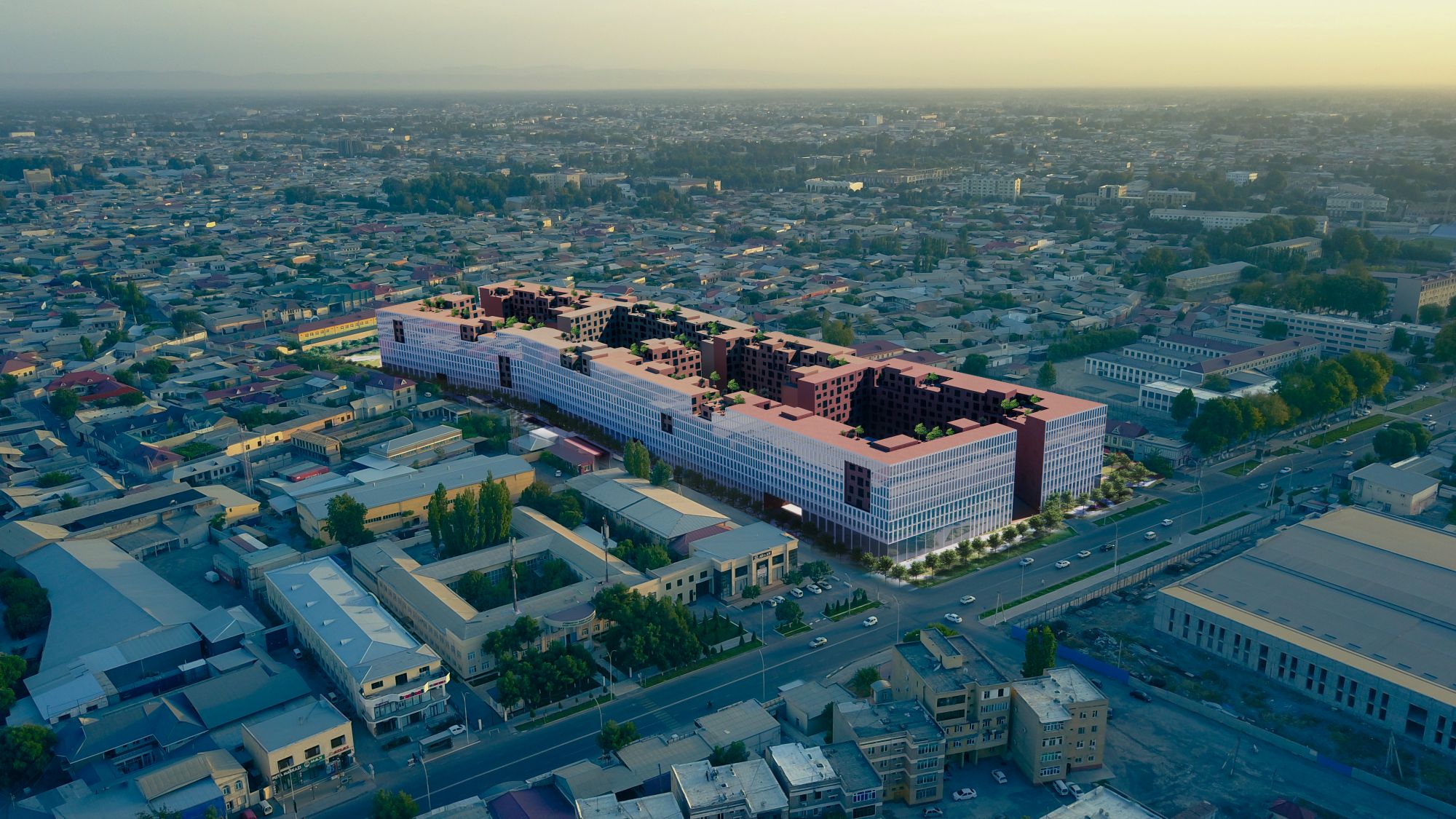
The client’s initial request to build three multi-story towers would not have harmoniously fit into such a dense urban fabric. The solution to create one large complex of comfortable height with private courtyards seemed obvious.
When we received the commission to design a residential complex here, we knew that we would draw inspiration from the history of the place. Our attention was caught by the country’s traditional architecture – the mahalla.
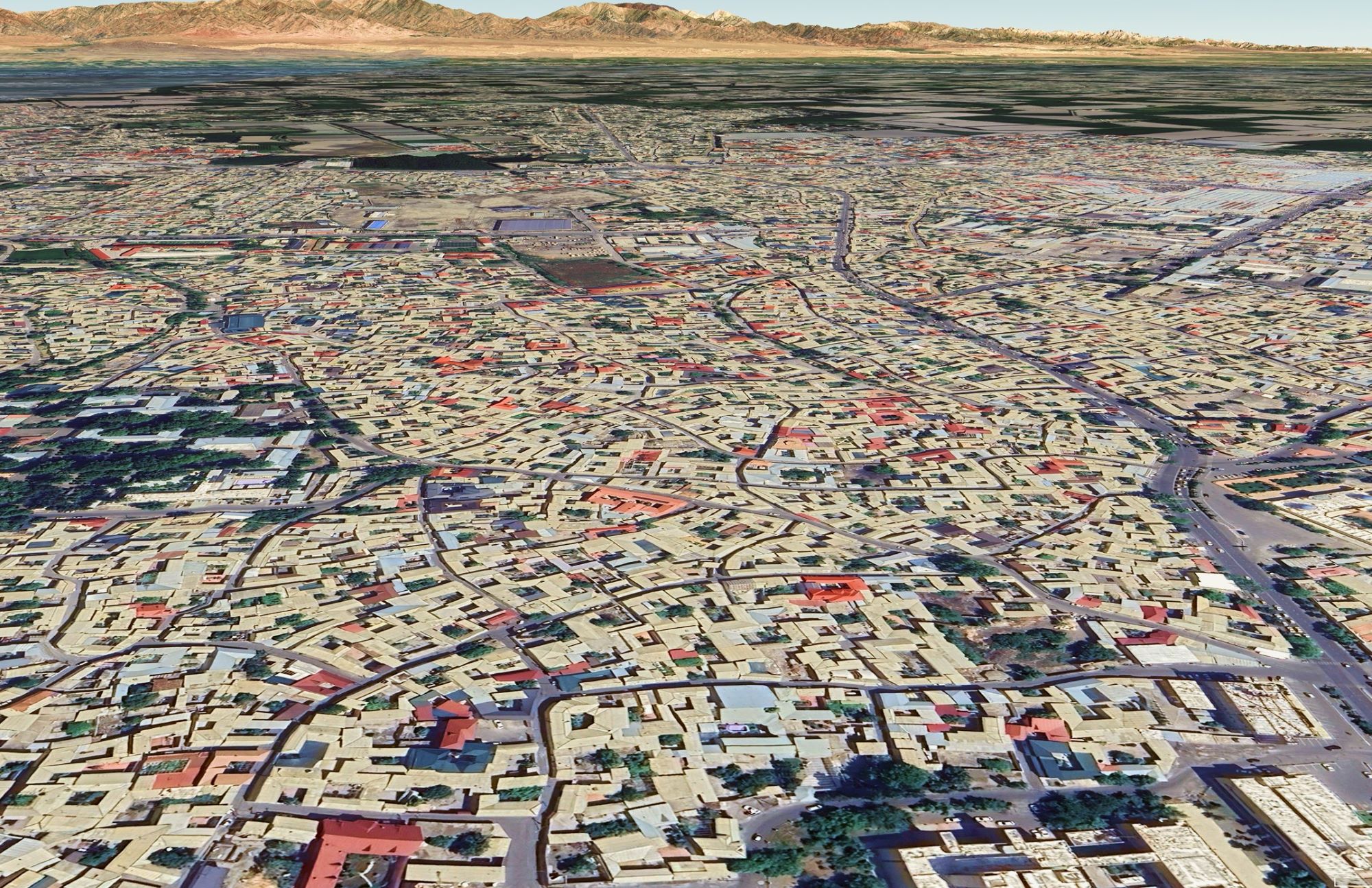
A mahalla consists of several houses gradually built by different generations of the same family. The houses are arranged so that they form a courtyard inside – a space for gathering close ones. All the windows face the courtyard as well. The perimeter walls of one such block have no windows and adjoin the walls of neighboring families’ houses. Together, they form a whole patchwork quilt of roofs.

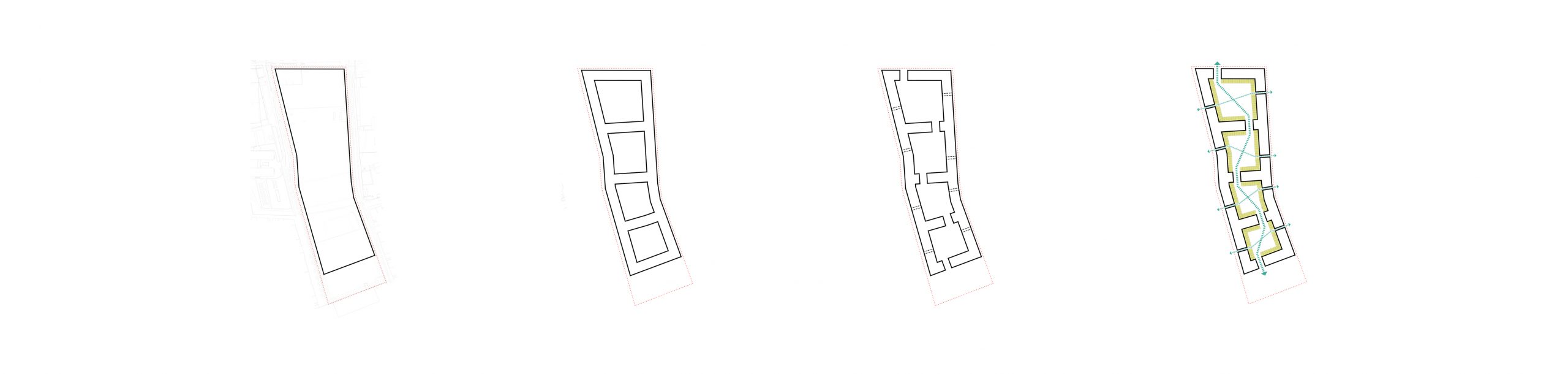
The idea of a private courtyard for gathering close ones moved into our project from traditional development. To support the patterns of «patch» roofs, we divided the building into 4 square blocks. So the complex could harmoniously fit into the environment.
The seismic activity of the region dictated to us the location of the gaps and arcs. Relative to them, pedestrian links have been formed: main, through all the internal space of the complex, and secondary for access to individual courtyards.
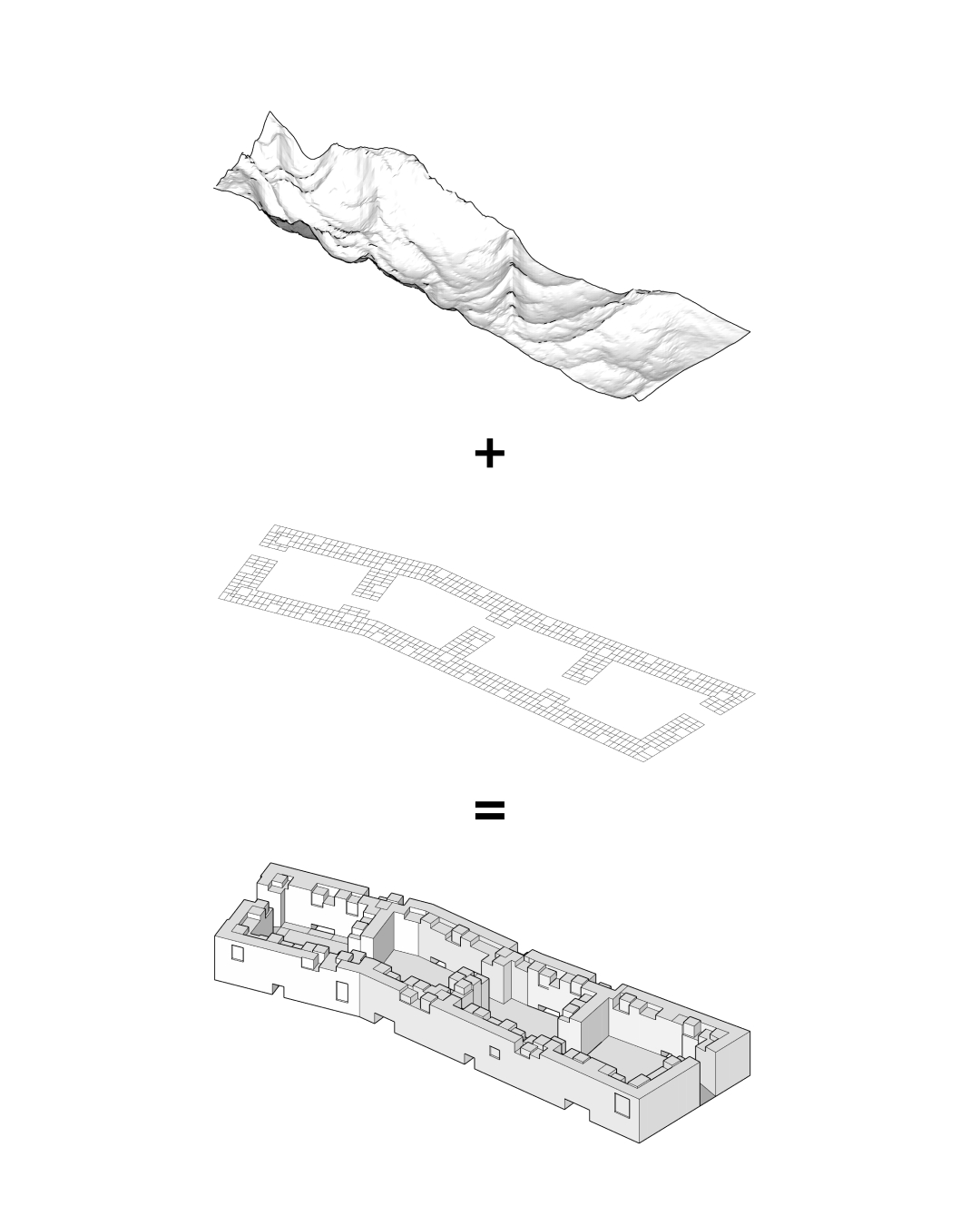
Our sources of inspiration were not only traditional architecture but also the surrounding city mountains. We borrowed their terrain to successfully integrate a large number of apartments.
With such a layout of the entire building, there ended up being more apartments than if we had used a solution based on high-rise towers.
The main formula of the shaping stage became the combination of: natural context + planning structure, which ultimately created a unique volume. Such an object combines contemporary architectural trends with a deep connection to its roots.
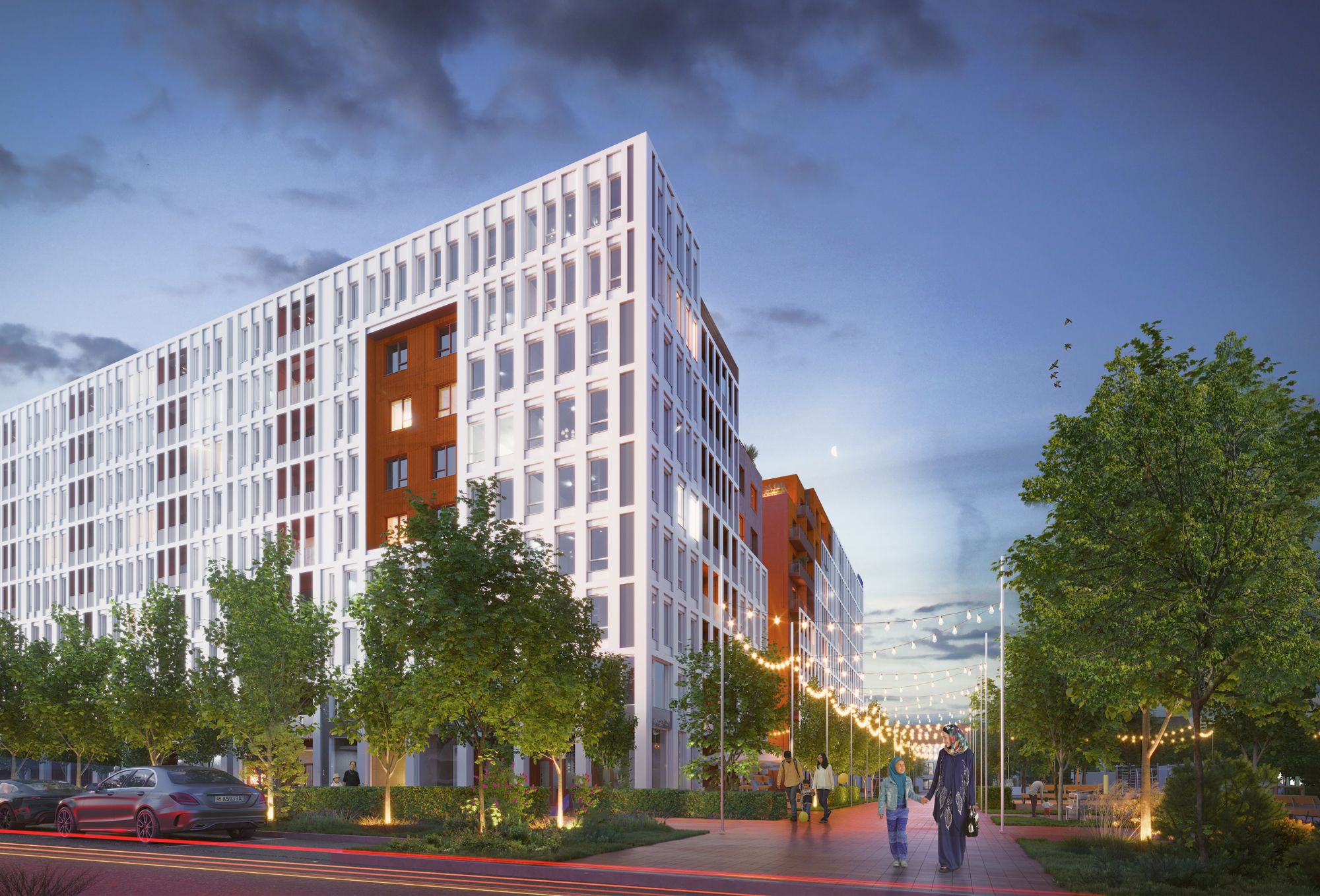
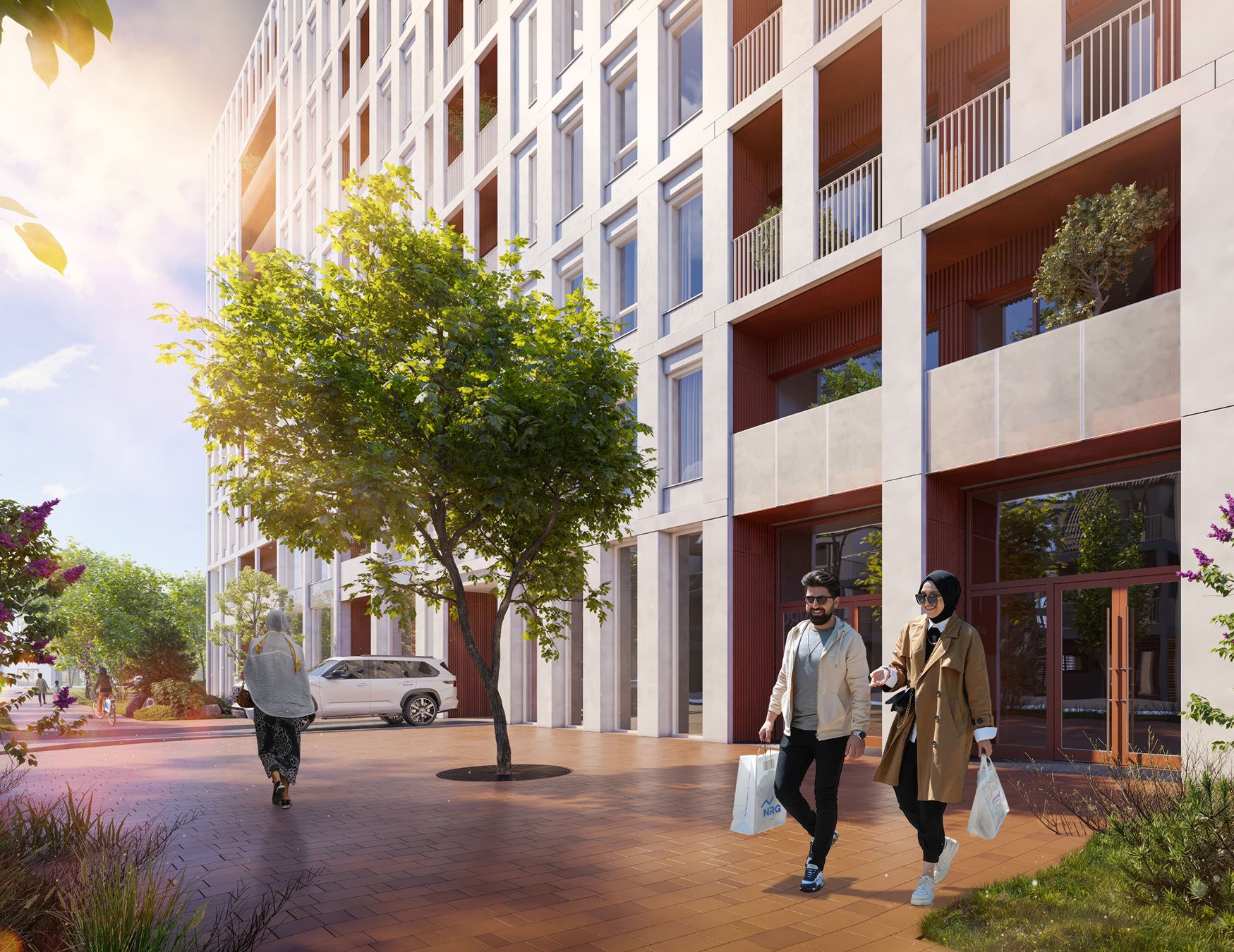
As we have previously said, a mahalla is a single-family home with its own courtyard. Their walls facing the common street have a minimum number of windows or are completely devoid of them.
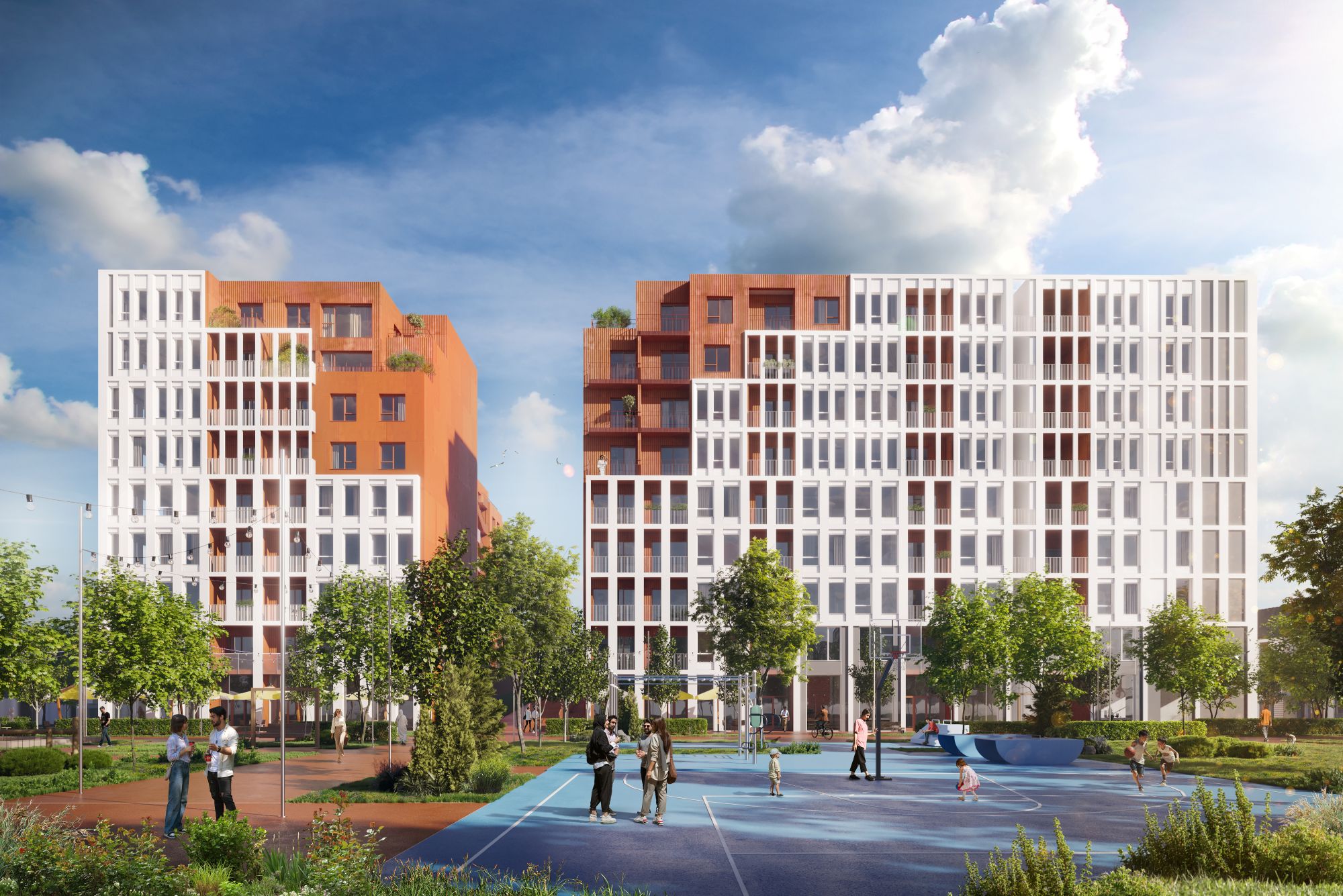
We have supported this tradition: the facades are white on the outside, in a strict structure. Several bright spots of terracotta cladding peek out from them, as if drawing large windows from windows.
From a distance, it seems that the entire building is a traditional house enlarged several times. At the same time, we modernized the general appearance of the area, orienting it to the architecture in a European manner.
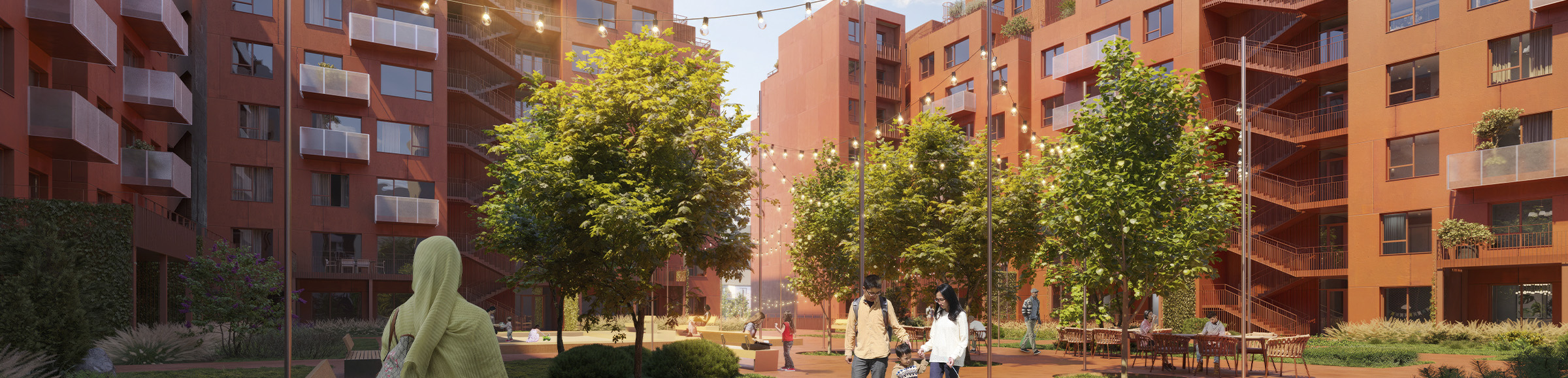
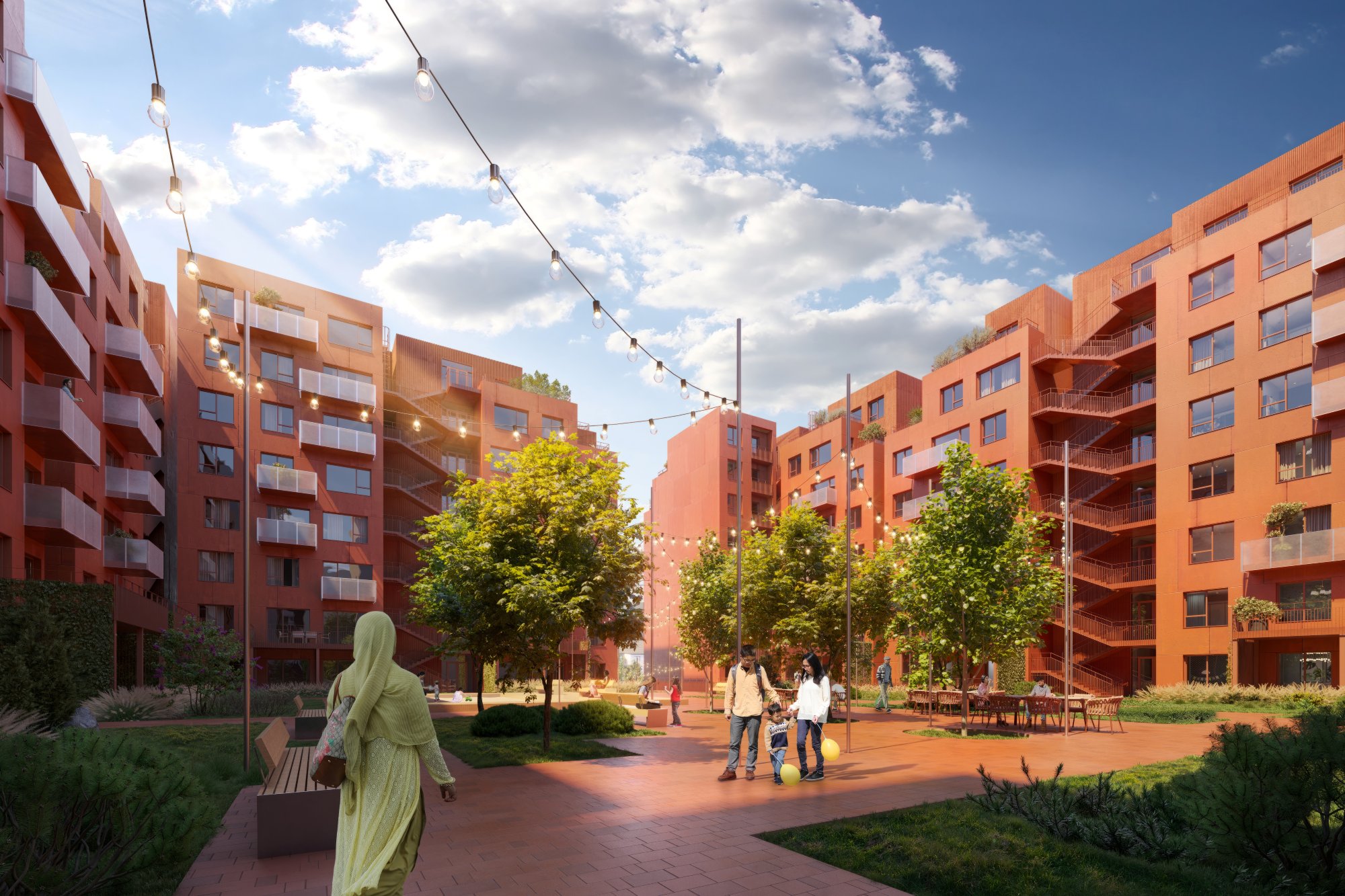
The dominant terracotta color became a tribute to the pottery craft. The facades in the courtyard resemble clay vases. This conceptual solution sets the character of each courtyard in an economically advantageous way.
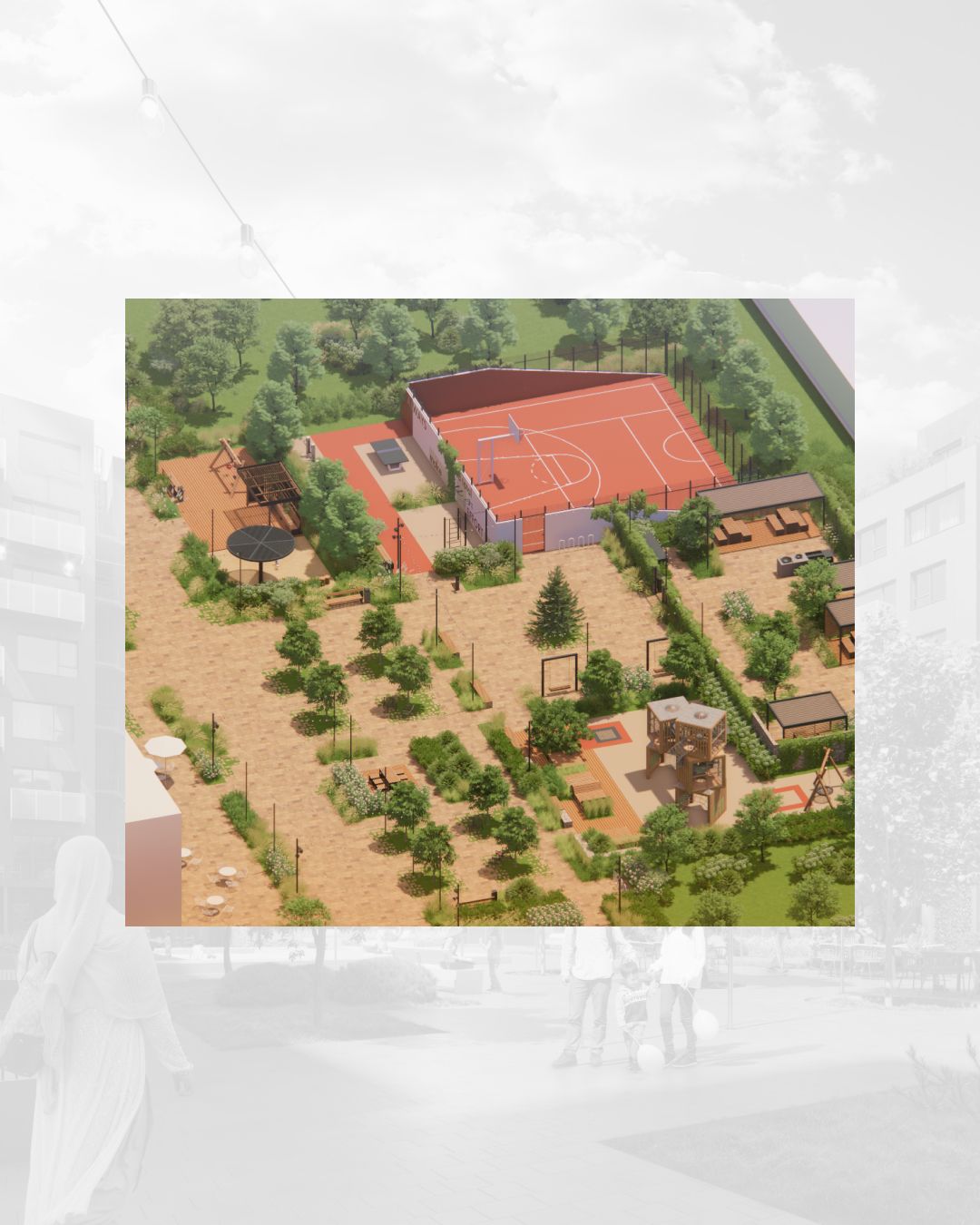
One of the advantages of closed courtyard spaces is the possibility to create private terraces for residents on the ground floors. The safety of children playing in the courtyards is also a priority. All parking spaces are located in the stilobate, and ramps from various sides lead into the inner courtyard area.
An additional playground with a sports hub and barbecue zone is located on the south side. Its location was dictated by two factors: the neighboring kindergarten, making it convenient for parents to take their children to the playground, and the required distances between buildings due to seismic activity.
SUPERMAHALLA shows that even in unstable conditions, it is possible to create conceptual objects where people can feel comfortable. Convenience is one of the main criteria we adhere to when designing anything—whether it’s a bench
or an entire neighborhood.
We believe architecture must stay connected to its environment, even amid rapid urbanization and vertical growth of cities. Taking into account the unique features of the area and developing them into modern images is the task we set
for ourselves in each project.